Arts
The politics of deception
M
🎨 A.I. MOJEREOLA | VISUAL ARTIST Sculptor • Wood Carver • Mixed-Media Artist 🇳🇬 Rooted in Yoruba culture, inspired by humanity, and driven by purpose. 🖌️ Painting | Sculpture | Wood Carving | Fiberglass ✨ art that educates, challenges, inspires, and tells powerful stories
October 17, 20261 min read1 views
The Politics of Deception
Medium:-Terracotta and Metal Sculpture,
Size:- 3 ft. high
Price:-$3000
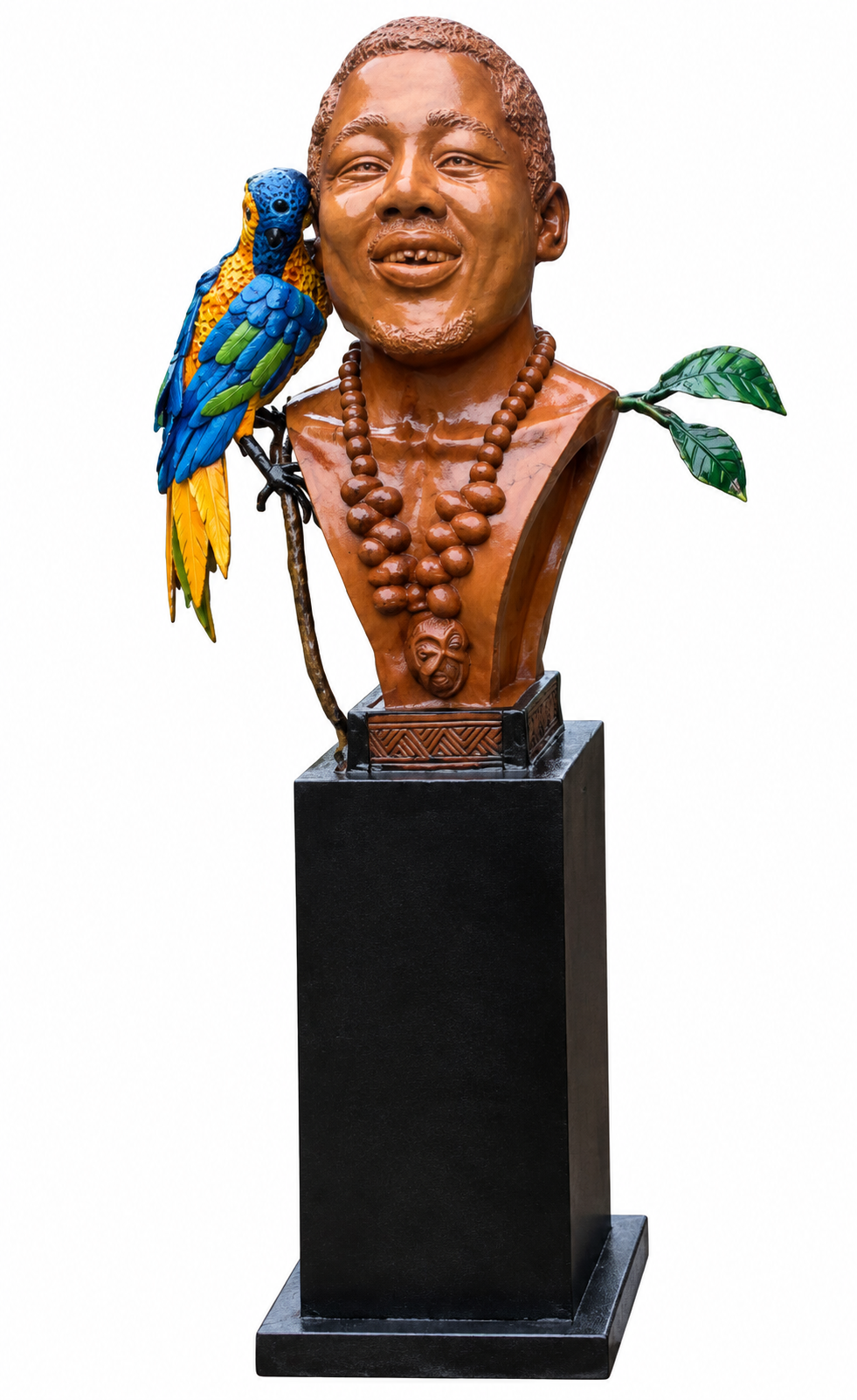
The Politics of Deception is a sculptural work that examines the relationship between political power and ordinary citizens in contemporary Nigeria and many African societies. Through the combination of terracotta and welded metal, the sculpture addresses issues of political manipulation, unfulfilled promises, propaganda, and the betrayal of public trust that often accompany the pursuit of political power.
The work portrays a smiling citizen whose facial expression conveys hope, trust, and confidence in the promises made by political leaders. Resting on his shoulder is a brightly colored metal parrot, which serves as the central symbol of the composition. In Yoruba cultural understanding, the parrot is connected to the saying “Ayé kò fẹ́ òtítọ́” (“the world does not want the truth”). This symbolism transforms the bird into a metaphor for politicians who use persuasive language, propaganda, and deceptive narratives to gain the support of the people.
The citizen's smile represents the optimism of voters during election periods, when promises of development, security, economic growth, and social welfare are repeatedly presented to the public. However, the position of the parrot on the shoulder suggests influence, control, and psychological dominance. It symbolizes the way political leaders can shape public perception by offering hope while concealing intentions that may ultimately serve personal or political interests rather than the welfare of the people.
The sculpture is also inspired by Section 14(2)(b) of the Constitution of the Federal Republic of Nigeria, which states that the security and welfare of the people shall be the primary purpose of government. By referencing this constitutional provision, the work questions whether political leaders truly uphold this responsibility after attaining power. It highlights the gap between campaign promises and the realities of hardship, insecurity, and economic challenges experienced by many citizens.
M
Written by
Mojereola Awal Ishola🎨 A.I. MOJEREOLA | VISUAL ARTIST Sculptor • Wood Carver • Mixed-Media Artist 🇳🇬 Rooted in Yoruba culture, inspired by humanity, and driven by purpose. 🖌️ Painting | Sculpture | Wood Carving | Fiberglass ✨ art that educates, challenges, inspires, and tells powerful stories
Reviews (0)
Join Creative Garden to post a review.