
Stories
An Echo In the Night
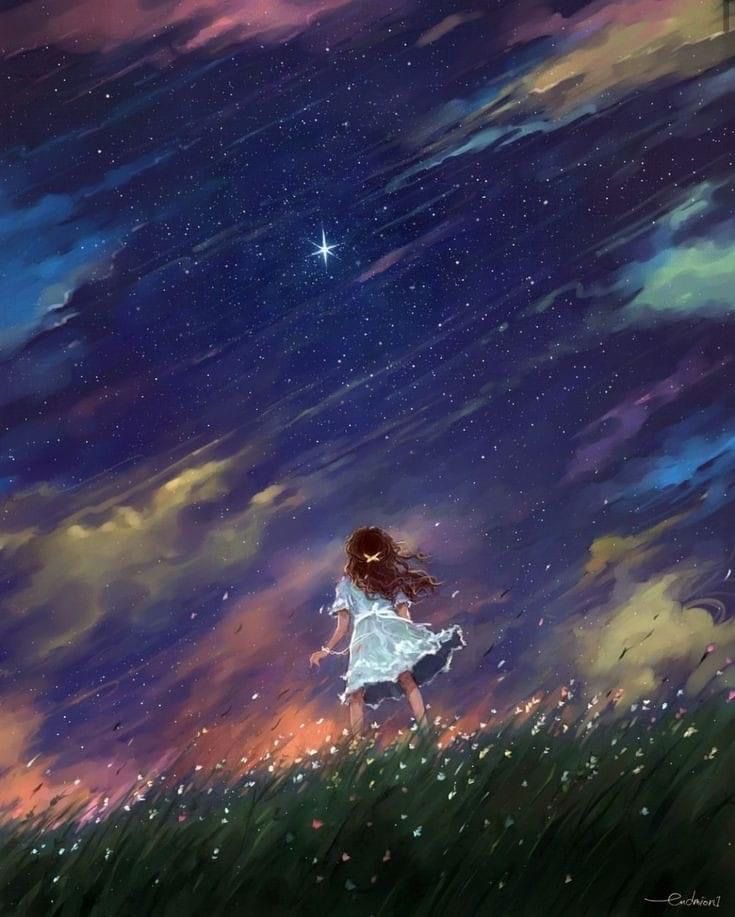
There was a girl.
There was a girl I knew.
There was a girl I knew who had a way with words.
Words and grammar and voice and wisdom—and grammar, because that was the name of what this girl could do. Her voice was a tear drop that came from her soul and from all of those that came before her; and when this girl, upon the hills or across the slope of the valley she called home, sang, grammar came forth.
It twisted the seeds of grain to wheat sprouting slowly out of the soil; it turned the clouds suspended in the sky into rain, plowed the river from east to west, hung the moon low and helped raise the sun high.
She was the wind.
She was the wind that blew.
This girl I knew was the wind that blew, and she became the avenue of someone else's verse.
She had a sister, and they both had a mother. All the women in this girl's family were naturally given the gift of grammar, the ability to give voice to the chirping squirrels, to make the flames burn hotter in every hearth, to cause a never-ending midsummer sun.
When this girl was only three, however, her and her sister watched as her mother was taken away soon after the Inquisition discovered only some of the truth of grammar, and some of the truth of what she was able to do.
Her mother wasn't slaughtered or anything of the sort, no. Rather than end her life, her mother was used; held in the hand of royalty and nobility, and turned into a tool.
So, when the rain pours down in the heat of summer, the girl knows it is her mother. When the soil is fertile, when the mountains rise to protect the valley in wartime, when the coffers never run empty, when the wheat and sorghum and barley and grapes spill from scorched earth, and when even in winter, nobody goes hungry or dies from the cold, the girl knows that it is all because of her mother.
Her sister knows it, too, and that is why whenever the sisters need to use the grammar speaking in their blood, whenever they feel the shimmering desire to change something that already exists to was, to isn't, to then, to now, they run for the hills.
The Inquisitors have returned almost six times now, since they took the sisters' mother away. Every time they return, they come expecting that the girl or her sister have flowered in their grammar just like their mother. More tools that they can steal and plug into the machines that run their world.
But the girl's sister is clever. After their mother was taken and they had to fend for each other from then on, the girl's sister learned how to hide her grammar. From her blood, from her voice, and from her eyes—because that is how the Inquisitors check for it. It was the trees that taught the girl's sister, she always said, and after, the girl's sister taught it to her.
At night, sometimes during a new moon and even beyond, the girl and her sister sneak out of their cottage and take off into the hills surrounding their village. There, they set down a mat made of raffia that they've braided and sit singing, hand clasped tightly onto each other's shoulders. The world quietens, and the trees, the critters, the earth, all stop to listen to them as they let their grammar fill the sweet and scented air.
Nobody knows where grammar comes from. Not even me. But it has always been here, and the world needs it to be seen, and so it can breathe. The world needs grammar to be experienced so it can exist, so it can continue. And the world needs grammar; ultimately, to be used, so it needs the sisters, too. It needs the girl, just as the girl needs the world.
But. The girl needs her sister just as well, too. So, when the girl wakes up the morning after they both return from the hills, she does not feel her sister's breath ebb steadily from the space beside her on the cot. She does not even hear her hum.
And when she opens her eyes, her sister is gone.
The girl chooses not to be alarmed. Maybe she's at the market, or the apothecary, or the tailor, or the school. Maybe she left at dawn to fetch water, pluck berries.
But the girl knows that this is not true, and knows her sister is not at any of these places. Her basket lies open on the ground, and the girl knows that her sister would never leave home without it; she would never leave it on the ground like that.
So she bursts from the house. She runs through the village. She does not stop on her way to the hills. This is the only place that her sister could possibly have gone to without letting her know.
From the highest hill, after deciding that this is where her sister must be, she calls out for her sister. She screams her name once. Twice. Four times. Now the herons fly down to help her. Now the trees sway to carry her voice. Now the river moves to send her voice far and wide.
The girl sings then, when shouting does not work. She carries the tear drop in her soul and she sings, with all of her being, for her sister, her twin, her family, her mother, her home, and does not care if grammar follows it, if it holds on tightly to her song. The girl sings and sings until her pain becomes so great and it all turns into a single, unbroken scream.
The world, in turn, screams with her.
The earth cracks in two, a horrible reverberation. The air grows sour, like rotten fruit, and a hand passes over the sun, turning a bright day into the blackest of nights. The river, for the first time, stops to flow, and all the birds collapse from the sky; necks and skulls cracking as they hit the ground. As the girl screams, the world goes white with pain and anguish, till the golden wheat withers back into the earth and her song grows dark, an echo in the night.
Later, all of the world returns to what the people that inherited it have made it, because the girl has allowed the grammar she possesses to stop holding up the sky, an Atlas who has given the responsibility to someone else.
The girl has a knife in her chest. Her mother has been taken and her sister is gone. She lays on the hill and watches, sorrowfully, as the world crumbles. From here, she hears the villagers screaming and pleading for someone to save them, but she cannot bring herself to move.
There was a girl. There was a girl I knew. There was a girl I knew who had her way with words. She was the wind. She was the wind that blew. But she is no longer the avenue of someone else's verse.
And because of this, I reveal myself to her for the first time. She does not scream. She does not gasp. She sits up and she does not move an inch. The girl knows this whole time that I have been with her, even when neither she nor her sister could see me.
“I know you,” she says. And I smile, because she is right. “I know who you are.”
“I, too, know who you are,” I say to the girl. I pause. And then I tell her something else. “And, fortunately, I know where your sister is.”
END.
Reviews (0)
Join Creative Garden to post a review.