Arts
When paper reaches our plates.
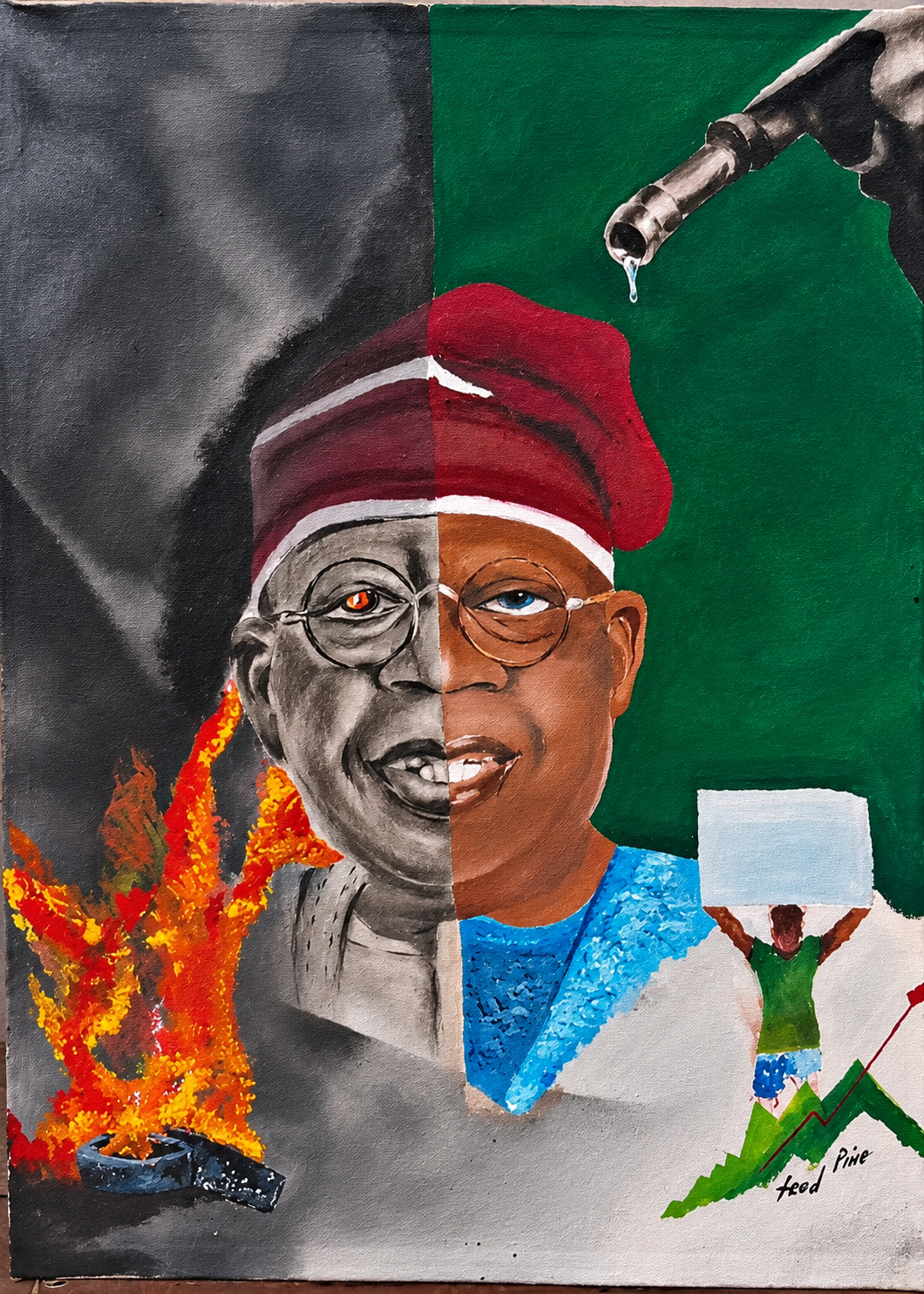
WHEN PAPER REACHES OUR PLATES
May 2023.
It came as regular news one morning.
The removal of the fuel subsidy in Nigeria.
And just like that, a conversation began.
Subsidy. Subsidy. Subsidy.
Everyone was talking about it.
Like many in my generation who don't necessarily follow the news or understand the intricacies of government policies, we were left to gather information from social media, conversations in public transport and everyday discussions around us.
And if you were anything like me, you were probably a novice to the conversation.
I mean, yes, subsidy was removed. But what was the big deal? What exactly did it mean?
I encountered the reality before I understood the definition.
The next time I boarded public transport, the fare had nearly tripled. And it wasn't funny.
That was when I started to understand, slowly but harshly, why it had become a conversation on everyone's lips.
It meant I could buy sachet water for five times the price I was accustomed to paying, sometimes for what felt like lesser quality.
But the impact wasn't just on transportation.
Fuel was never just about the cars and motorcycles we boarded. It was connected to our farms, businesses, food, electricity and almost every part of our everyday lives.
From the filling stations to the bus stops, from the markets to our dining tables, the consequences travelled.
And irrespective of our age, profession or social class, we all had to encounter the reality somehow.
I remember thinking that perhaps, when those responsible realised how deeply this was affecting the masses, something would change.
Yes, the subsidy system had its problems. Corruption, leakages and inefficiencies were part of the argument for its removal. But if a system was broken, shouldn't there have been adequate alternatives to cushion the people from the consequences of removing it?
Removing a flawed system without sufficiently preparing another leaves ordinary people to negotiate their survival with an economy they did not design.
Three years have passed. There have been interventions and promises of relief, but how adequately have these translated into better living conditions for the people?
And this is where my concern goes beyond subsidy.
Our lives are influenced by decisions we may not even understand when they are being made.
A decision documented on paper can determine what a family eats, whether a student gets to school, whether a business survives and how comfortably a household can live.
The ten-year old may not understand subsidy, but knows that the money for snacks no longer buys the same things.
The twenty-year old feels it at the bus stop. The forty-year old feels it while providing for a family. And the sixty-year old watches their purchasing power diminish.
Different experiences, one economic reality.
This is why governance cannot be a distant conversation reserved for politicians and economists.
There is hope, but not merely in the papers we carry during protests. There is hope in understanding the papers on which policies are written, asking questions, demanding accountability and participating in the processes that shape our future.
Because the same papers that document decisions capable of changing our lives can also document decisions that create a better future.
Perhaps that is why I am writing this.
We cannot continue to be spectators to the processes that determine how we live.
The people who live with the consequences must also have a voice in shaping the decisions.
Because policy doesn't end on paper. Eventually, it reaches our homes, our pockets and our plates.
~ Mking_tracy
#kingartist #policy #mercy #writer
Reviews (0)
Join Creative Garden to post a review.